Tuesday, September 11, 2007

Please take a moment of silence today... and get on your knees to pray... pray hard...

Today is the 6th anniversary for honoring our fallen countrymen on Tuesday, September 11, 2001. You might note that it's the first 9/11 falling on a Tuesday since that day 6 years ago.Take a moment of silence today. Meditate. Pray for peace. Pray for some sanity on this planet between people of differing spiritual and religious covenants---and pray for them to start communicating with one another. Communication leads to understanding, which leads to acceptance. That is the road to peace.

I apologize if that comes across as condescending or seemingly too simple, but it really IS that simple. It doesn't seem like it should be brain surgery, but to some it is apparently. I just wish more of us could figure that out, including some of our leaders.

I will do all these things too, and I will also pray for our troops in Afghanistan and Iraq. I will pray for Chis Vanderhorn, my high school classmate who gave his life in Iraq on January 1, 2006. I will pray for the welfare of his widowed wife and his two little children.

I don't care if you're Buddhist, Jewish, Hindu, Muslim, Christian, Native American Church, or worship Zeus and his thunderbolts
from the Greek Church of the many Gods. Please pray in earnest today. Agnostics and atheists, you're part of this process as well---you have your own moral compass to steer by and know what you need to do to wish for these things too.

So all of you, if you could, pray that the human race stops behaving like a warring clan of binobos, wandering to the next neighborhood just to club another over the head. Is that asking too much?

Also, pray for our precious planet and for the recovery of its environmental health. Oh, and pray for a new President... and quickly, please... I'm sick of living this nightmare, so the sooner the better...
S

Monday, September 10, 2007

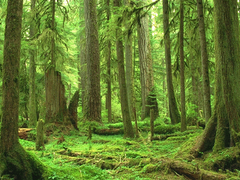
THE LARGER P-PATCH -- The Boreal Forest is Earth's Green Crown

Since lots of subject matter lately has involved oil drilling in the Arctic National Wildlife Refuge, near the arctic circle, that only drives home the unattractive truth about human encroachment into the once seemingly untouchable reaches of the planet.

It seems the human imprint is being stretched across every square mile of terra firma---and it's only a matter of time before all of it's determined as a resource or to be preserved---essentially either gallowed in the mail as a harvesting project, or protected through our efforts. If governments are going to take count of what resources exist out there, then we need to take the extra measures to be part of the process of helping them determine how we preserve what precious gems we still have---especially if the survival and longevity of the planet, animal species, and OUR species (we're known as homo sapiens, FYI) depends on it.

That being said, I thought I’d bring attention to an article on the Boreal Forest, which stretches across Canada and Russia. My understanding of this expanse of northern woodlands is that it produces much of the oxygen we breath. The series Planet Earth televised earlier this year covered the Boreal Forest and its importance to the planet in a very impressionable documentary. See the article below the map.

In the far-north latitudes, just below the treeless tundra of the polar region, a forest of evergreen trees encircles the earth. This is the boreal forest, and it is the biggest terrestrial ecosystem in the world. It is also largely intact, free of roads and industrial development -- especially in Canada, where more than 1.3 billion pristine acres are found. The global boreal forests are larger than even the Amazon rainforest.

Like the Amazon, the boreal forest is of critical importance to all living things. Its trees and peatlands comprise one of the world's largest "carbon reservoirs"; carbon stored in this way is carbon not released into the atmosphere, where it would trap heat and accelerate global warming. Its wetlands filter millions of gallons of water each day. And as a vast and intact forest ecosystem, it still supports a natural food web, complete with large carnivores like bears, wolves and lynx along with thousands of other species of plants, mammals, birds and insects. The boreal forest is also home to hundreds of First Nations communities, many of which rely on fishing, hunting and trapping for their livelihoods.

Despite its global significance, Canada's boreal forest is in great danger today. Large industries -- timber, mining, oil, gas, and hydropower companies -- are eyeing it for development, and less than 8 percent of the boreal forest is protected from large-scale industrial development. NRDC is partnering with many other environmental groups and with First Nations to forge lasting agreements that will ensure the survival of Canada's boreal forest -- to stay abreast of our work in the boreal, bookmark this page and check back. And to learn when you can take online action to help protect the boreal, subscribe to Earth Action, NRDC's biweekly email alert.

Related Pages
The Boreal Forest: Links
An Interview with Chief John Miswagon of the Pimicikamak Cree
Through the Trees: The Truth Behind Logging in Canada --> America's Gas Tank: The High Cost of Canada's Oil and Gas Export Strategy -- An October 2002 report from NRDC and the Sierra Club of Canada.


One of my points here, now having highlighted an article by these guys for the 3rd or 4th time, is that NRDC is an excellent resource for hot button topics as they arise, and they have the best success rate of any environmental organization—however, I believe their strongest suit is their ability to dial their subscribers like myself into taking action through letters to Congress, Senators, the White House, domestic officials, and foreign government officials.

Wherever there’s something being put on the stake to be torched, these guys are the hawk’s eye to get on top of it right away. I wonder if they’re hiring right now… S

Saturday, September 8, 2007

Drilling in the Arctic National Wildlife Refuge, by Shell Oil, is upon us.

A letter by Robert F. Kennedy, Jr, the Senior Attorney of the NRDC, just brought this to my attention. Here’s the content of his letter.

Dear NRDC Member,

As you read this, the Shell oil company may have already begun exploratory drilling off the spectacular coastline of the Arctic Nation Wildlife Refuge.

We simply cannot afford to fail – or we’ll be leaving the Arctic Refuge vulnerable to a catastrophic oil spill that could despoil the shores of our greatest wildlife sanctuary for generations to come.

In fact, it would take just one oil spill on the icebound Beaufort Sea that borders the Arctic Refuge to create a long-term toxic waste site – because the oil industry has no proven method for cleaning up oil in icy water!

Last month, NRDC President Frances Beincke and I wrote to alert you that the Bush Administration had already approved Shell’s dangerous plan for drilling in the Beaufort.

And as I write this, Shell’s icebreakers and drilling equipment are likely on the move.

A worst case spill in the Beaufort Sea sends shivers down the spine of anyone who knows the appalling record of toxic spills by Big Oil in the Arctic.

And make no mistake: an oil spill off the coast of the Arctic Refuge is all but assured. The Bush Administration’s own experts have predicted that drilling in the Beaufort will lead to at least one oil spill.

That spill would likely spread into the migratory routes of the endangered bowhead whale… blanket the shores of the Arctic Refuge where polar bears give birth… and impact hundreds of thousands of migratory birds.

The death toll of oil-soaked and poisoned whales, seals, polar bears and shore birds would be unimaginable.

With your help, we can win this case – because the Administration’s approval of Shell’s drilling is a brazen violation of our country’s environmental laws.

All we need is your backing.

So there, the check’s in the mail. I’m sending $30 to help out. If any of you are interested in helping with this cause or other fights for the environment, you can link to the website of the NRDC at NRDC: The Earth's Best Defense.

I’ve said before, as I’ll say again now: future generations many years from now are going to look back at us as if we were completely nuts for blasting through all these oil reserves. Well, they’re right. Many of us are nuts. Those of us who have no sense or desire for conservation, environmental stewardship, sustainability, or to seek a desire to implement auto technology and get away from our addiction to fossil fuels.

I like to think I exist in a different camp. As one prominent environmentalist recently said: “This is not just a scientific issue, this is a moral issue.”

If the tide was turning in a direction of upholding these ideals I hold so dear—the ones I just stated in the previous paragraph—then this blog wouldn’t exist. …but here I am, and I don’t plan on going away anytime soon. S

Thursday, September 6, 2007

The Bozo Bus: Big SpOil's Top Ten in Washington

A quick little update here; the top bozos on the hill in Washington who have received campaign funding from the oil monkeys, along with their respective amounts... and I'm assuming these are the dollars that we know about.
The paddywagon's filled to the tilt with bozos today! See if you can match the name below to the bozo in the picture. Be careful, as looks can be deceiving. Take your time and good luck! Here's the Bozo list:
  1. Kay Bailey Hutchison, Senate (R, TX) - $300,161
  2. Joe Barton, House (R, TX) - $184,300
  3. John Cornyn, Senate (R, TX) - $180,000
  4. Bob Corker, Senate (R, TN) - $173,700
  5. Mary Fallin, House (R, OK) - $162,450
  6. Heather Wison, House (R, NM) - $144,000
  7. Dennis Hastert, House (R, IL) - $134,600
  8. Jon Kyl, Senate (R, AZ) - $133,700
  9. Steve Pearce, House (R, NM) - $121,578
  10. Barbara Cubin, House (R, WY) - $119,150
The source of this information is from the Center for Responsive Politics. Hmmm... All Republicans too... what a shocker.
Stop --- don't thank me --- you're welcome. I was happy to add warm fuzzies to your day.
S

Saturday, August 25, 2007

10 Things You Can Do to Fight Global Warming! - A list from the Environmental Defense Action Fund

Hey everyone, I just received my care package today from the Environmental Defense Action Fund, including my free tote bag to bring to the grocery store. One of the goodies in it listed 10 things we can do to fight global warming.

10 Things You Can Do to Fight Global Warming!

1. Recycle and buy minimally packed goods as much as possible.

2. Wash clothes in cold or warm water, not hot.

3. Install low-flow shower heads to use less water.

4. Run the dishwasher only when full and don’t use hear to dry dishes.

5. Replace standard light bulbs with compact fluorescent bulbs.

6. Plug air leaks in windows and doors to increase energy efficiency.

7. Replace old appliances with energy-efficient models.

8. Walk, bike, carpool or use public transportation whenever possible.

9. Adjust your thermostat—lower in winter, higher in summer.

10. Share these simple steps with friends and family and increase awareness!

Follow these easy steps to fight global warming!

You can link to the EDAF site here: Environmental Defense Action Fund - Finding the ways that work. Since we tend to be creatures of repetition (until we make it part of our everyday lifestyle), I’ll try to reprint these sorts of lists when I come across them. S

Friday, August 24, 2007

DiCaprio's envirodoc "The 11th Hour" expands on what we already know about our climate crisis and searches desparately for solutions.

I just came back from Leonardo DiCaprio’s new envirodoc, The 11th Hour. …and I’m not crying in my scotch, nor feeling suicidal, nor beyond depressed; mainly because it’s not telling me anything new but reinforcing information I already have upstairs. It shows that information in a different, broader light, basically expanding on An Inconvenient Truth, Gore’s envirodoc from last year. Thankfully, it's much less scientific and less of a brainiac exercise. I didn’t feel like I was sitting in an introductory version of “Global Warming for Dummies,” having to take careful notes like I did with the prior docthe mere reinforcement of information was good enough and a nice approach.

Instead of focusing on the finer scientific details, The 11th Hour assumes the accuracy of the data presented in Truth and pans the camera back even further to take a broader, almost spiritual angle on what is happening to the planet and the consequences for human habits and thinking of the 20th Century. In many ways it’s the fraternal twin to its predecessor.

Like Truth, is takes the audience through the consequences of a bleak future, interviewing the scientific community. It seems to wallow a bit in the darkness until it finally makes the upward climb and begins to present solutions to the current global climate crisis. It focuses on solutions involving outside-the-box thinking with renewable resources, green design (thinking of a building as sustainable like a tree, rather than existing as merely as a roof and bastion of energy consumption), and rethinking industrial waste and how such byproducts can be altered or refurbished to make it another entity's fuel (or food, in the case of fungi and mushrooms). Then of course there's the inevitable reality of having to overturn “big spoil” (a term I believe I came up with) and the political mechanizations that are working against such a transformation to a greener society living off cleaner energy methods.

It goes into how we can learn from the structure of nature in order to ensure our own survival as a species. As I indicate in my comment in my margin about the polar bear, this film pointed out what is all to obvious to anyone who is in tune with environmental realities: that EVERYTHING on this planet is connected, and when we destroy the environment, we are destroying ourselves. WE ARE the environment.

The industrial revolution taught us differently and exists as an obsolete ideology that lives in a fantasy world; the notion that natural resources are abundant and that we can go on producing and expanding without any consequences for the planet. That ideology is archaic and narrow in its thinking, much like a child brought up in an abusive household. A lifetime (or generation, figuratively) of rehabilitation is necessary to amend the problem—and more realistically, it will involve a new generation to rethink how humans interact with their environment and built society around them, more than likely having to tear down and rebuild the 20th Century society as we knew it.

It’s merely a shift in thinking that needs to occur, and it doesn’t mean we need to erode our lifestyles as we know them. It’s an adjustment in thinking and approach. Rather than thinking of a built world vs. nature, think of everything as THE environment—YOUR ENVIRONMENT.

Make everyday decisions that embrace sustainability, and think one step beyond to expand your own life choices. When you consider transportation choices that embrace efficiency and promote health, why not also seek out telecommuting options—or when presented with the choice, go with the employer who will provide them? Be a taskmaster when driving around town and be efficient with your driving to reduce oil consumption—or why not try taking the bus? Turn the shower off while you lather up—why do you need the water on during that part of bathing anyway? Seriously, why? If it’s because it’s inconvenient to turn off the water, then you have bigger issues than what I’m trying to get at here.

What other examples can I think of… Don’t just purchase local produce, plant your own garden for that matter and grow your own produce, feeding it with food waste to produce mulch and carbonize the soil. Take a step back in your life and ask yourself if you need all that material “stuff” around you, and you might find that you won’t need ALL of it—and therefore won’t need to work and travel as hard to attain it. I know that sounds “countereconomic” at first, but think about it for a minute. Slowing down a bit and being frugal about your consumption does not mean a sacrifice in lifestyle… and according to The 11th Hour, if we don’t start changing our habits about how we live—and changing them quickly—we’ll have bigger issues to contend with than worrying about our dainty little lifestyles and the apathetic entitlement issues that tag along with them.

So that’s enough pontificating from me today. Go see the movie for yourself to enhance your understanding on what you should do be a better member of a democratic consumer-based society (remember what Obama says: "Make yourself useful!"), or check out the website if you can't make it to the theater. You might have to seek it out a bit, like in your progressive moviehouses in your “liberal” part of town, but it’s worth it. Hey, I even picked up several postcards and a free movie poster, suitable for framing… with a frame made from sustainable materials, that is… see? I’m faced with a choice right there as a direct result of seeing the movie… but will I take the bus to the framing store?

Hmmmm... facing another lifestyle choice, am I? ...or merely a choice involving frugality? S

Friday, August 3, 2007

Sicko movie, Moore's best work, drives home that America's all about "ME" and not "WE."

I recently saw the new Michael Moore movie offering, Sicko. It's well worth checking out.

I tend to be a bit of a skeptic when it comes to Michael Moore, well, probably more like having my filter on... however in this one he really sits back
and lets the facts speak for themselves rather than shoving a shtick sandwich down our throats (minus the spicy mustard too, how pleasant of him).

It's true, in that when one compares our health care system to that of Canada, Britain, France, or even Cuba, it's a sad scenario... and I don't see it changing in my lifetime without some serious guts being spilled on the floor in the political universe... boy is that going to be ugly, but bring it on.


The issue of our broken health care system is intensely personal for me. I watched my parents in the 1990s, who were self-employed and paying full premiums for coverage, lose their entire life savings from a doomsday scenario that nearly took my father's life. They did nothing but bust their ass for their whole working life---and for what? Unfortunately 3 brain surgeries in the span of a year tend to add up. When total costs exceed a million, covering 10% is going to kill your savings if you're an American self-employed working family in your mid-50s and just coming off helping a son through college. You're screwed, and there's nothing you can do. I don't believe there was better coverage available at the time.


My mother is about to turn 70 and still working to keep the ship afloat. My folks should be retired enjoying their golden years in sunny Arizona, but it hasn't worked out that way.

In any of the other countries I called out earlier, they would be doing exactly that. But noooo, we're in America, where you kindaaaa don't wannaaaa get sick...


Screw the health insurance companies and pharmaceutical companies. Once again, we're dealing with a situation and folks that simply have no soul. So to hell with them. Drop the bomb on them. Regulate their asses.

I saw an interview on television recently where a man made a comment to the effect of: "Well, currently there are 40 million Americans without health insurance, so obviously the system of privatization is not working." ...and that doesn't even include the horror stories about those that do have coverage. ...like my folks...

So bring them down and don't break their fall. I'm willing to go toe to toe with them on this issue, hath blood shall spill, and while I'm sure some of it will be my own, I'm bringing those fucks down with me (but hopefully I don't end up in a hospital, where I fall prey to my health insurance). So bring 'em on. I'm a cat who wants to clean its claws.


I have one word for y'all:
GObama!

In terms of the movie, I won't give anything away to spoil things, but the most aggravating part of the film was a small detail in which King George II is sitting down to sign some joke of a bill screwing seniors out of affordable prescriptions, and you can see him snickering as he signs it. I don't think I can accurately describe how much I wanted to jump through the movie screen and strangle the guy.


Mostly, and sadly, if you think anywhere in the ballpark that I do, you'll walk away realizing once again---as if you didn't already know---that we're a nation of "me" and not "we."
S

I can assure you everyone's holding their breath, Barry.

To update the last blog, we're now one HR away from having the all-time record tied. Things have been at a standstill I believe for over a week now.

I'm just waiting on the edge of my seat with baited breath. ...now where did I put that nail file? My toes need clipping... S

Tuesday, July 24, 2007

The Bozo Bus, Rt. #3: Barry Bonds. There's an elephant in the room... and I'm going to talk about it.

Barry Bonds. Christ, what a spectacle. The cancer in baseball that won’t go away.

It’s interesting that the elephant is the logo for the Oakland A’s, who are across the harbor from the San Francisco Giants, because the elephant is in the latter team’s park. The issue being that the most coveted record in all of sports, the career home run record, is soon (we assume) to be broken by Bonds—a record that has been held by Hank Aaron since the 1970s—at 755 home runs. Aaron passed Babe Ruth in 1974 when he hit 715 near the beginning of that season… and he did it on nothing other than persistence, concentration, strength, talent, and a little luck in being injury-free for most of his career.

I’d like to digress for a moment by saying that hitting a home run is one of the most difficult athletic feats that any human may achieve. The amount of “equipoise,” meaning concentration coupled with relaxation, in addition to all of the other physiological factors that go into hitting a baseball over the fences—let alone at all in the first place—are too involved to describe. If you're a player on a streak, and you wake up constipated one morning, you're probably not hitting a home run that day. That being said, baseball records have been sacred and contained a confident degree of authenticity. Up until the recent past, however, the American public always had the satisfaction of knowing that these baseball records were hallowed and knew the numbers by heart; what "61" means, and what "755" means, or "56" in the case of Dimaggio's hitting streak. ".406" in the case of the last time a man had a batting average over .400 in a season, as was in the case of Ted Williams in 1941.

But Barry Bonds has tainted the whole picture due to his steroid use. He already tainted the single season home run record (which is at 73), so why not the career one as well. The ugliness and controversy surrounding this character are enough to make my living room turn into a vomitorium. At this point, I really no longer know what to do with this Bozo. I feel like dumping him in the San Francisco Bay wouldn’t be enough, he’d just get out, dry off, and come back to the plate. He just simply won’t go away.

The Commissioner won’t comment on the matter, other than revealing the fact that he’s “biased” and that “personal feelings are getting in the way” of the way he feels about the matter. Selig, who I personally like but feel should turn over the reigns of Commissioner soon to “someone else when they leave office” (see my post a month or so back) has also revealed that he won’t be involved in any ceremony for the record unless the Giants organization invites him to be part of it. Well, he need not say anything more.

Bonds hasn’t helped his case with his combative attitude, abrasive demeanor with reporters, and asinine comments over the years. Frankly, I’ve never known any professional player in all of sports who has been more of a total jackass. Allow me to point out a few examples on how badly the dung on this elephant stinks (...but only if YOU allow me...).

  1. Hijacking the Bucs. For those who don’t know, Bonds began his career with the Pittsburgh Pirates (anyone recall the “Killer Bees” of him, Bobby Bonilla and Jay Bell from 1991-92?). After 2-3 years of close but unsuccessful runs at trying to make it into the World Series with Pittsburgh, Bonds suddenly demanded a trade to the Giants, citing the fact that “Willie Mays is my Godfather and I should be on the same team as he.” As a result, the Bucs were held hostage and forced to negotiate with San Francisco (and therefore no leverage), so they basically had no choice but to shovel him off due to his demands. ...and compare that scrawny physique to the photo above...
  1. The shoe contract denial. It was around 1998, when Air Jordan and Shaq ruled the world of shoe endorsements, and apparently no shoe company had a desire to give Bonds an endorsement. So they didn’t… and Bonds complained about the fact that “he had to purchase his own shoes” to play the game of baseball. So what did we do in San Diego and Arizona that year when the idiot was in town? Since he was in such need, all the fans threw their shoes onto the field not as a loaner, but to keep. Barefoot fans were leaving the stands that season… and Barry got his free shoes… probably more than he had asked for…
  1. The "walking and standing" comment. It was the summer of 2004, and this comment still leaves me trying to pick my jaw up from the floor to this day. Bonds has a history of getting walked a lot, for obvious reasons. So around August of that year, he complained to the media about how he was getting walked all the time, and how it resulted in “all the walking and standing he was having to do, and why won’t somebody else do it.”

See my hand raised? Okay! I will! …and so would the rest of America. Meanwhile, see me rub my forefinger and thumb together? That's my violin prowess playing a sad song for you Barry. Cry me a river.

With all the money he earns to play a game, and for his “walking and standing,” Bonds basically offended the entire working class of the nation with that comment. What about all the waiters and waitresses that “walk and stand” all day? What about the nurses, construction workers, and salesmen who have sore feet at the end of the day? Don’t be mistaken folks, this guy is a first class a-hole with zero sensitivity.

  1. Then there’s the steroid use, which seemed to have started up following the snub that happened to him after Ken Griffey, Jr. was voted over he and Greg Maddux as the “player of the 1990s.” While is was a periphery reward and issue, I know that got to his ego and pissed him off—so interestingly enough, he stooped to the lowest level possible. Doping.

As it stands tonight, he’s 5 homeruns away from the record, and going through a bit of a cold streak in July. Perhaps he’ll hit a couple in the next few days, and then venture to Dodger Stadium where he can really turn up the heat and be well-received by the Dodger faithful.

It’s amazing that his doping hasn’t been technically proven, but it doesn’t need to be. Everyone knows, and everyone can see it. It’s evident as he went from being near-anorexic to the physique comparable to that of a beefy football player as he turned 40. Come on, who in the hell are you fooling? Barry, you’re not only insulting my intelligence, but you’re insulting the game, the record, and above all—YOURSELF.

When Bonds breaks the record, no matter how you slice it, and no matter how silent everyone will be with an elephant in the room, one word will be attached to the new home run record for all of eternity: DOPING, DOPING DOPING. Bonds, you’re a complete fraud. Do us all a favor and go away. S

Sunday, July 8, 2007

Dreamliner unveiling earns polite golf clap from environmental camp; a teaser of how we need to step up more with public-private partnerships.

Boeing just unveiled it’s new 787 Dreamliner today to an airline hanger full of employees out of Paine Field in Everett, Washington. What a spectacle. Tom Brokaw was the MC, and many dignitaries were on hand. Despite what seemed like a few multimedia glitches, it was something along the lines of what folks might experience at Disneyland—a totally polished presentation—offering participation from Boeing's partners and customers from around the world. I didn't see any clowns, which I can try to deal with, but otherwise it was a good show! (When the camera panned over some of the government officials, I did catch a couple Bozos.)

While Boeing and its hard-working employees deserve a congratulations and have earned a day of back-slapping in the international spotlight, let's focus on the environmental end of this new machine and what it offers in terms of fuel efficiency. Here’s what the CEO of Boeing has to say about the Dreamliner:

Boeing Chief Executive Jim McNerney said the 787 will bring about a "dramatic improvement in air travel: to make it more affordable, comfortable and convenient for passengers, more efficient and profitable for airlines, and more environmentally progressive for our Earth."

Here's more comments on the design, from an article on Physorg.com:

The 787 -- Boeing's first new model in 13 years -- will make its maiden test flight later this year before going into commercial service with Japan's All Nippon Airways (ANA) in 2008.
The new aircraft boasts several revolutionary design features, most notably the use of high-tech plastic composites instead of aluminum.
Up to 50 percent of the primary structure of the plane -- including the fuselage and wing -- will be made of composites such as carbon-fiber.
"By manufacturing a one-piece fuselage section, we are eliminating 1,500 aluminum sheets and 40,000 - 50,000 fasteners," Boeing said in a statement.
The composites used in the Dreamliner are also stronger and lighter than traditional materials, allowing the plane greater fuel efficiency.
"In addition to bringing big-jet ranges to mid-size airplanes, the 787 will provide airlines with unmatched fuel efficiency, resulting in exceptional environmental performance," Boeing has said. "The airplane will use 20 percent less fuel for comparable missions than today's similarly sized airplane."
Lower fuel-costs could in theory lead to cheaper long-haul travel, aviation industry analysts say.
Richard Aboulafia, chief analyst with the Teal Group Corporation, said the Dreamliner was poised to revolutionize air travel if its projected rates of fuel-efficiency proved accurate.
"If you look at it from an airline standpoint: you don't have a choice," Aboulafia told AFP. "If you don't have a 787-class aircraft and your competitor does, he can under-price you and out-profit you.
"We can't be sure of their performance objectives, but if it does what they say, it's revolutionary, both in terms of the plane's operating economics and durability," Aboulafia added.

It's nice to see that it offers 20% more fuel efficiency over that of like-sized jets. While I wish it could have been better than that, the lighter design means it will be able to travel further distance faster. Despite my personal high standards and expectations for transportation fuel efficiency, which can probably be criticized as unrealistic, it’s nice to see that a major player in the aviation industry is making efforts with innovative design and finding ways to see passenger jets attain higher standards for fuel efficiency.

The private sector needs to step up and do more, however. The sector doesn’t tend to do enough to make such efforts due to the simple fact that considerations such as being environmentally friendly cost time and money. However I think things are starting to change.

The public is becoming more aware of environmental issues and that a successful future for the environment—or if there’s to be a sunny future at all—it’s going to require participation and efforts from EVERYONE, including the private business sector. With companies such as Boeing who are involved in the transportation sector, that involves the use of green materials, better design, and new ideas about fuel efficiency—or cleaner or renewable fuels to help us get around.

So while today’s 787 Dreamliner unveiling was encouraging, it only reminded me of how slow business is to make real and meaningful commitments to the environment. We need to step up and do more—and start acting fast—and that means the private sector as well.

To have the private sector embrace environmental issues in a meaningful way, that means successful public-private partnerships. If you were watching the 787 Dreamliner unveiling today, you would have seen the high number of government officials in attendance. While some were there for the cameras, many were behind the scenes as part of the effort to carry forward with the mission upholding the public-private partnership team that made this project successful.

Partnerships between the government and private sector have been happening for years; they don't just fly on flagpoles and advertise themselves on banners in skyscraper breezeways. In addition to occurring in signed agreements, they're brought to the forefront at the ballot box, galvanized in commission and council meetings, and they can be seen in the way municipal codes are written.

It's this type of communication, openness, and partnering amongst the public and private sector that will also serve as part of the blueprint for success with the environment and everything that effects it. The 787 Dreamliner is a small teaser of what greater things we're capable of and should be pursuing. S